Midlife arrives quietly—and suddenly we find ourselves asking: How did I get here? Where am I going? What’s next?
This chapter speaks to that disorientation. When the roadmap that guided the first half of life no longer fits, we must learn to navigate new terrain with fresh awareness.
Midlife can also become one of the most creative and rewarding times of life. Many people are discovering their unique creative choices, often through the images they share on Instagram, Facebook, or TikTok. But beyond the surface of those photos lies a deeper emotional landscape—one that is rarely expressed or even acknowledged.
Carl Jung turned to the mandala as a way to explore this inner terrain. The mandala, a Sanskrit word meaning circle, has long been used across spiritual traditions as a symbol of wholeness. Jung saw it as a representation of the self—a microcosm of the psyche.
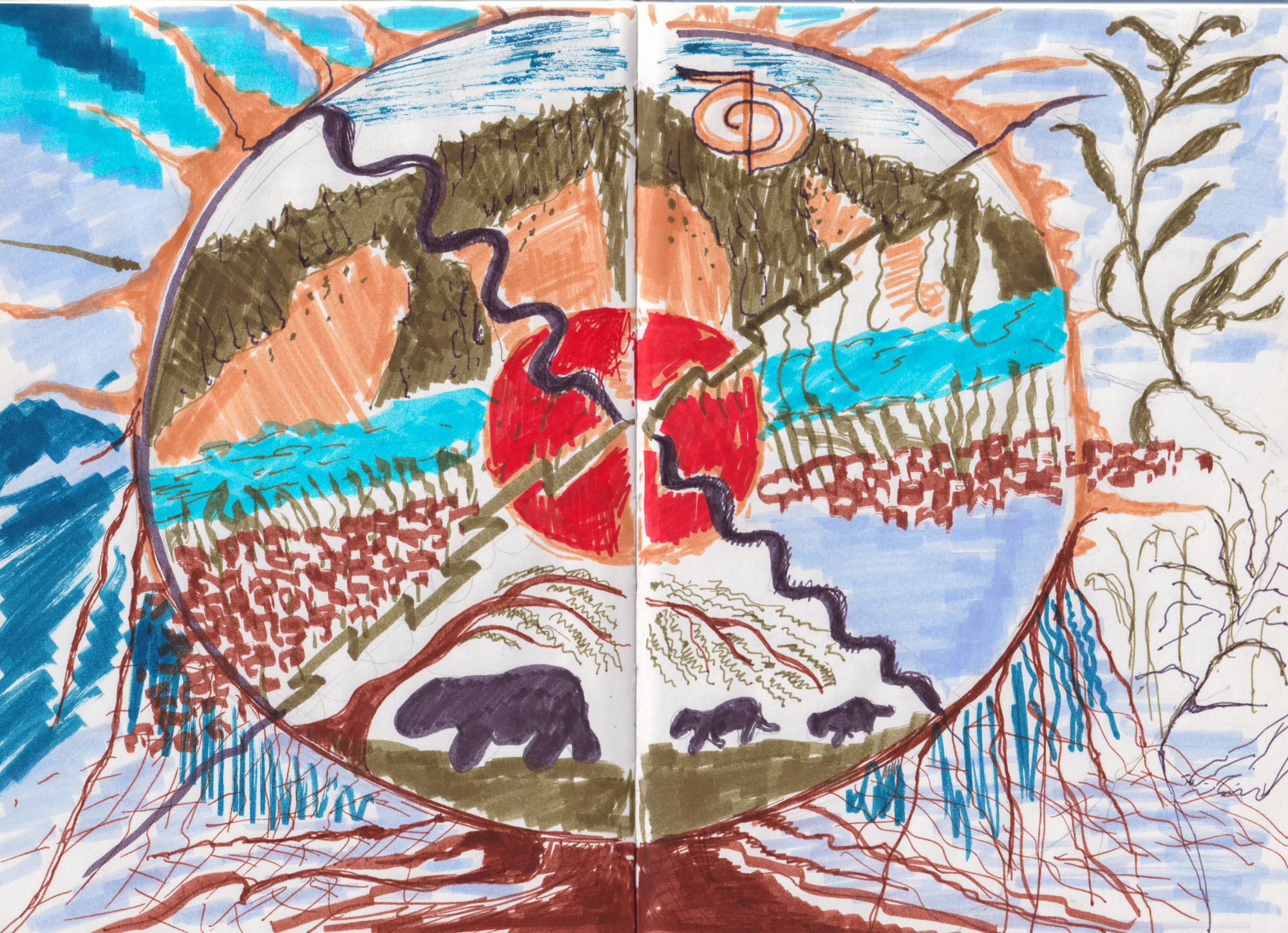
In this chapter, I share how Jung’s mandala practice informed my own experience during a wilderness trek in Wyoming. Sitting beside a river, I paused to journal and paint a mandala—an image that still brings insight and grounding from that time of personal transition.
[/et_pb_text][/et_pb_column] [/et_pb_row] [/et_pb_section]