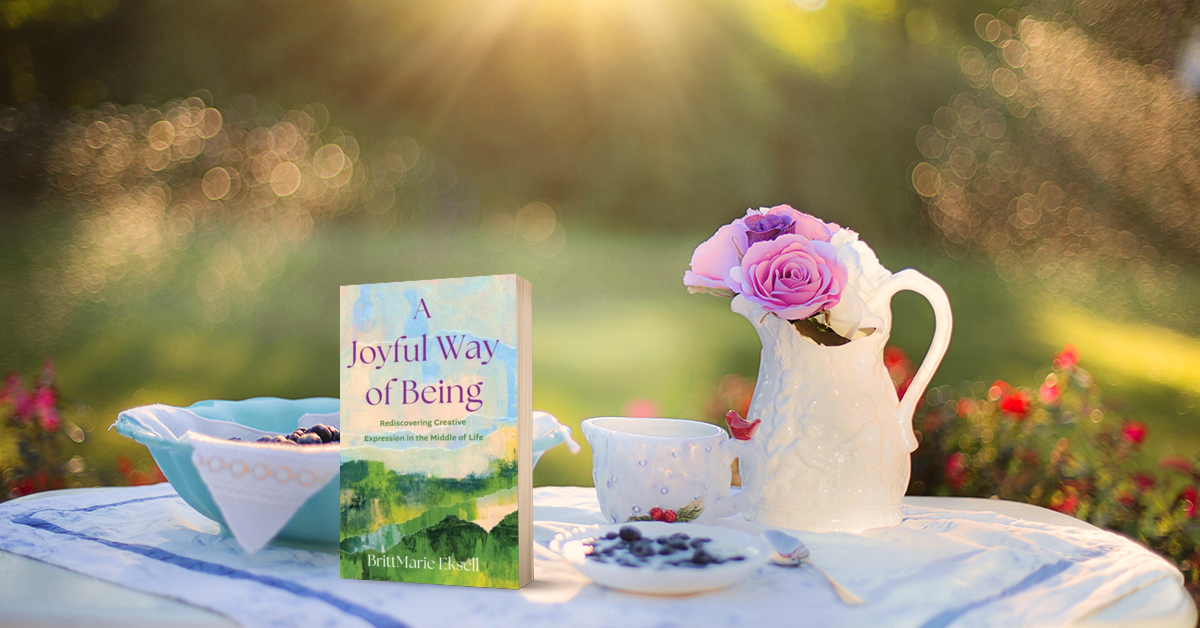
Distributed By | Simon & Schuster
Published By | She Writes Press
Available for Pre-Order Wherever Books Are Sold
Chapter One: Stepping into Midlife – The Ground is Shifting Beneath Your Feet
Midlife along life’s journey,
I woke to find myself
in a dark wood.
– Dante Aligheri,
Today, maybe more than ever before, when we are faced with overwhelm and exhaustion from both natural and man-made disasters, it is not unusual that we also feel a tumultuous transition within ourselves. So how, we may ask, do we look at the world around us with optimism and hope?
We are all acting as a conduit of the effects of that which is taking place in our environment. The projection of anxieties both from without and from within is noted. We may notice we feel more tired than usual, or our focus and alertness are not so present, even if on an unconscious level. This is the time when it is extra helpful for our health of mind, hope, and well-being to move even further within.
By connecting to the joy that lies in wait for all of us, the process of moving into the flow of creativity will happen one step at a time . . .
Becoming human means discovering our fullness and learning to live from it. This involves bringing forth more of who we really are and becoming more available to whatever life presents.
—John Welwood
You may be asking yourself, “Is there an inner artist in me? If so, why have I not met this artist earlier in my life, or have I? Can I remember any creative activities I did, and how did I feel about those once completed?” There likely is more than one answer to these questions and reflecting on your experience with art as a child will provide insights into how you can bring back that sense of joy and wonder into your life today.
Throughout my early work as an art therapist, I often worked with young children. Their sense of clarity, color combinations, and balance in composition is so instinctually well-crafted because they haven’t adopted the “inner critic” of most adults. Many of us are taught that composition is difficult and that it takes years of practice to learn. But when we can allow ourselves to simply “be” with the voice of our own creative lens, composition has a natural ease and flow. From the moment we are born, we are composers, as may be found in your early, yet often well-balanced pictures of both colors and objects.
It is not unusual to notice that people’s inborn instinct for expression is overtaken by their conscious minds. What we may not realize is that our expressive instinct is still within us. We have the capacity to change, to grow and transform with our authentic creative imagination at the core of every human being.

Chapter Three: Reframing Creativity as Essential to Your Life
A human being would certainly not grow to be seventy or eighty years old if this longevity had no meaning for the species.
The afternoon of life must have a significance of its own and cannot be merely a pitiful appendage of life’s morning.
C.G.Jung
As we age, it is not unusual to look back on our lives and consider how we behaved and what beliefs motivated us. How has my life made a difference, if not for others, then at least for myself? What have I learned from my mistakes and from my successes? At midlife, our thoughts about who we are as humans begin to shift.
When we transition to a new roadmap and creative quest at this stage, we are slowly getting used to hearing a new voice from within. As is often the case with something new, even if it is how we use our own voice, we may find that we are not always immediately accepting of this shift. That is the time when our recognition and patience in letting go of conditioned judgments and regrets can be our most important learning opportunities and allies on our journey.
Chapter Four: Cultivating Your Artful Lens
Our souls are naturally hungry for beauty. The primary way of cultivating our artful lens is to become aware of our need to find beauty in the world. We often look for beauty in art, music, landscapes, gardening, clothes, friendships, and ourselves. When we do not see the beauty around us, the beauty cannot possibly be present as an affirmation of our own inner beauty.
At midlife, we may feel that the beauty of life that brought us joy in our youth is slipping away. My experience is that there is no better guide to finding beauty again than reconnecting to the kinds of play we knew as children. It is in the universal and ageless act of play that we release our imagination. Playing not only facilitates emotional health and a sense of joy, but it is also in playing that we are able to communicate the beauty that spontaneously comes forward from the depth of our soul, our inner voice. As children, playing was the most natural way of being, it became a way of communicating long before we were able to use language.
When we embark on the second half of our life, we’ve often lost the belief that play is natural. But we can trust that its presence is still underneath layers upon layers of life experiences that have accumulated impressions and memories since childhood. In cultivating our artful lens, we are supported in the meeting of our old friend “play” again. The rejoicing brought forward by this meeting can show us the way to unexpected surprises and spontaneous expressions. The door to our creative potential is once again open when we release our imagination and become the child in us that is forever present but not always recognized as our true Self. Play in midlife, which can be fun, relaxing, and eye opening, will lead us on our new creative path to magic, mystery, and continued curiosity.
Let the beauty we love be what we do.
There are hundreds of ways to kneel
and kiss the ground
-Rumi